As an Amazon Associate we earn from qualifying purchases. Prices and availability are shown on Amazon, not here.
Key takeaways
- Best all-rounder: Ticket to Ride £14.95 — the full game, not the junior one. 2–5 players, 30–60 min, box 8+.
- Best for puzzle-minded children: Azul £19.49 — tile drafting with no luck and no reading. 2–4 players, box 8+.
- Best short game: Sushi Go! £28.19 — card drafting in a tin, 15 minutes, travels well. Box 8+.
- Best for a crowd: Codenames £10.55 — teams, one-word clues, teaches in a minute. Box says 14+, works from 10 on a mixed team.
- The age on the box is about reading and patience, not difficulty. Codenames at 14+ is a vocabulary rating; Catan at 10+ is a negotiation rating, and that one means it.
- Skip: junior editions of games they're now old enough to play properly, and expansions before a second game. An expansion adds rules to something they've played twice; a new game adds a new evening.
Eight is the age where a child stops needing the game simplified and starts resenting it. They can read a rule, hold a plan for three turns, and spot when a grown-up is going easy on them. The problem is that the shelf jumps straight from picture-based family boxes to 90-minute strategy games with a rulebook like a tax return.
This is the step up from our best board games for 6-8 year olds guide: games with real decisions, no dead time, and a rulebook a child can learn from without an adult translating. Everything here is widely stocked in the UK and the facts below — player counts, box ages, play times — are printed on the box and don't change. Prices do: board games swing several pounds between retailers and discount hard around Black Friday, so the figures on this page come from our own catalogue and are refreshed daily.
TL;DR
- Best all-rounder: Ticket to Ride £14.95 — the full version of the game they played at six. 2–5 players, 30–60 min, box 8+.
- Best for a child who likes puzzles: Azul £19.49 — tile-drafting with no luck to hide behind. 2–4 players, 30–45 min, box 8+.
- Best 15-minute game: Sushi Go! £28.19 — card drafting in a tin, plays anywhere. 2–5 players, ~15 min, box 8+.
- Best for a group or a party: Codenames £10.55 — two teams, one-word clues. 2–8+ players, ~15 min, box 14+ but fine from 10 with a mixed team.
- Best 'proper' board game: Catan £14.95 — trade, build, negotiate. 3–4 players, 60–90 min, box 10+.
- Skip: the 'junior' edition of a game they're now old enough to play properly. At this age a junior box is a downgrade they'll notice.
What changes at 8
Three things, and they're what separate a game that gets replayed from one that gets shelved.
They can hold a plan. A 6-year-old plays the turn in front of them. An 8-year-old can set up a move two or three turns ahead and be annoyed when you block it — which is the point. Games with no forward planning (roll, move, done) now read as babyish.
They can lose properly. Not always gracefully, but they understand losing to a better decision rather than a worse dice roll. That means you can stop steering the game toward co-operative boxes, though a co-op is still the safer choice for a mixed-age table.
They can read the rules themselves. This matters more than it sounds. A game a child can learn and then teach to a friend gets played on sleepovers; a game that needs a parent to set up gets played at Christmas.
Comparison table
| Game | Players | Play time | Box age | Reading needed | Price now |
|---|---|---|---|---|---|
| Ticket to Ride | 2–5 | 30–60 min | 8+ | Place names only | £14.95 |
| Azul | 2–4 | 30–45 min | 8+ | None | £19.49 |
| Sushi Go! | 2–5 | ~15 min | 8+ | None | £28.19 |
| Codenames | 2–8+ | ~15 min | 14+ (works at 10) | Yes, fluent | £10.55 |
| Catan | 3–4 | 60–90 min | 10+ | Some | £14.95 |
| Carcassonne | 2–5 | 30–45 min | 7+ | None | £22.15 |
Things the box doesn't tell you
The age on the box is a reading-and-patience rating, not a difficulty one. Codenames says 14+ because it assumes an adult vocabulary, not because the rules are hard — a 10-year-old on a team with a parent plays it fine. Meanwhile Catan says 10+ and means it: the trading is the hard part, and a younger child gets talked out of good deals and stops enjoying it.
Player count is not a range, it's a set of different games. Catan at three players is a different, tighter game than at four. Ticket to Ride at two is almost cordial; at five it's a knife fight over routes. If you'll mostly play with two, buy for two — a five-player box played as a pair is often the weakest version of itself.
Expansions are not upgrades. The shelf is full of Catan and Ticket to Ride expansions that say 'requires base game'. They add rules to a game you already know; they don't make it better for a child who's played it twice. Buy a second, different game before you buy an expansion.
'Deluxe' and 'anniversary' editions mostly buy you nicer bits. Heavier tokens, a cloth bag, a bigger box. The game is identical. At this age it isn't worth the premium unless you're buying a gift that needs to look like one.
Where to start
If they liked the six-year-old version of Ticket to Ride, buy the full game and nothing else — it's the cleanest upgrade on this page and it'll take a year to get old.
If they're the kind of child who finishes jigsaws, Azul is the one. No reading, no luck to blame, and short enough to play twice.
If you want something for a table of mixed ages at Christmas, Codenames takes eight people and teaches in a minute.
For younger siblings joining in, our family board games guide covers the boxes that stretch from six-year-olds to adults.
Our picks

Ticket to Ride
Days of Wonder
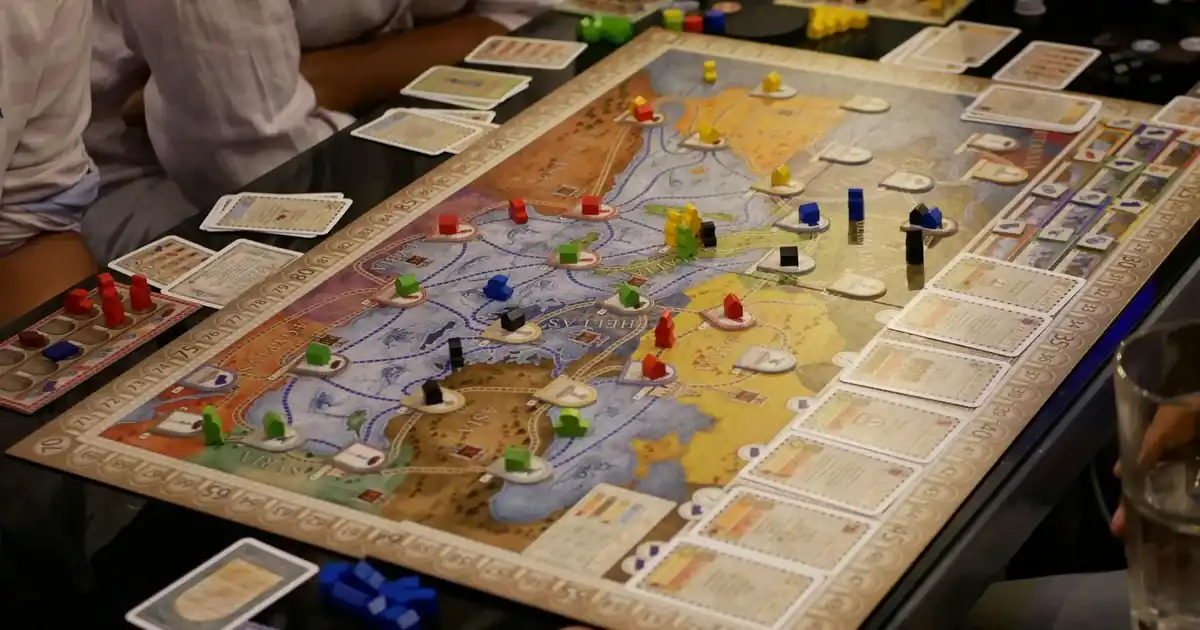
Collect coloured train cards, claim routes across a map, complete secret tickets for points. 2–5 players, 30–60 min, box age 8+. The full version of the game many children meet at six — longer routes, blocking, and a real reason to keep your tickets hidden.
£14.95 Retrieved on 01/10/2026 · prices subject to change

Azul
Next Move Games
Draft coloured tiles from shared factories and lay them on your board in patterns, taking penalties for tiles you can't place. 2–4 players, 30–45 min, box age 8+. No reading, no dice, and no luck to blame — which some children love and others find unforgiving.
£19.49 Retrieved on 01/10/2026 · prices subject to change

Sushi Go!
Gamewright
Pass your hand of cards around the table, keeping one each time, and build sets that score. 2–5 players, ~15 min, box age 8+. Comes in a tin, fits in a bag, and teaches the 'what will be left when this comes back to me?' thinking that underpins heavier games later.
£28.19 Retrieved on 01/10/2026 · prices subject to change

Codenames
Czech Games Edition
Two teams, a grid of words, and a spymaster giving one-word clues to link several at once. 2–8+ players, ~15 min, box age 14+ — but a 10-year-old on a mixed team plays it well. Needs fluent reading, unlike everything else on this page.
£10.55 Retrieved on 01/10/2026 · prices subject to change

Catan
Catan Studio
Collect resources, trade with other players, build roads and settlements toward ten points. 3–4 players, 60–90 min, box age 10+. The trading is the whole game, and it's the part a younger child finds hardest — best played as a family before it's played between friends.
£14.95 Retrieved on 01/10/2026 · prices subject to change
Carcassonne
Z-Man Games
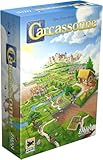
Draw a tile, place it to extend roads and cities, claim features with your meeples. 2–5 players, 30–45 min, box age 7+. No reading at all and a rules explanation that takes two minutes, which makes it the easiest of these to teach to a visiting friend.
£22.15 Retrieved on 01/10/2026 · prices subject to change
On ThePriceMonkey
Products from this guide in our catalogue — current price, specs and availability on each page.
- Ticket to Ride · Asmodee
- Azul · Azul
- Sushi Go! · DEVIR
- Codenames · CGE Czech Games Edition
- Catan · CATAN
- Carcassonne · Z-Man Games
FAQ
Is my 8-year-old ready for Catan?
Usually not on their own, but yes with a grown-up at the table. The rules are simple — roll, collect, build — but the game is decided by trading, and that's a negotiation against adults. An 8-year-old will accept bad trades and then feel cheated. Play it as a family for the first few games, be visibly fair, and it becomes the game they ask for at 10. If you want something with the same 'proper board game' feel and no negotiation, Ticket to Ride is the better first purchase.
The box says 14+ and my child is 10. Does the age rating matter?
Less than you'd think, and it varies by publisher. Box ages in Europe are mostly a reading and attention-span guideline, not a safety or difficulty certification. Codenames is rated 14+ because its word associations assume an adult vocabulary — on a team with a parent giving clues, a 10-year-old contributes fine. Where the rating does mean something is play length: a game rated 12+ that runs two hours is rated that way because younger players lose interest, and no amount of parental enthusiasm fixes that.
Co-operative or competitive at this age?
Competitive is fine now, and often preferred — being taken seriously as an opponent is part of the appeal. Co-operative games still earn their place in two situations: a mixed-age table where a younger sibling would be outclassed, and a child who takes losing badly enough that it ends the evening. Our co-operative board games guide covers those.
How long do these games actually take?
Add 10–15 minutes to the box time for the first two or three plays, then the box time is honest. The exception is Catan, where the stated 60–90 minutes assumes players who know the game; a first play with children runs closer to two hours. If you're playing on a school night, start with something from the 15-minute column.