As an Amazon Associate we earn from qualifying purchases. Prices and availability are shown on Amazon, not here.
Key takeaways
- Best solo mode in a big box: Wingspan (1–5 players, box age 14+) — the base box ships an Automa deck that plays as a real opponent, not a score target. £54.92
- Best heavy solo: Scythe (1–5 players, box age 14+, 90–115 min) — an Automa opponent that takes board positions off you rather than racing a number. £65.95
- Best short solo: Cascadia (1–4 players, box age 10+, 30–45 min) — a tight tile puzzle against a scoring target. Honest about being a puzzle rather than an opponent. £24.45
- Best solo-only design: Final Girl — one player, no multiplayer mode at all, 20–60 minutes per scenario. Nothing in it is a variant of anything.
- Read the box, not the player count. A '1' on the front can mean a designed opponent system, a difficulty ladder, a score to beat, or a co-op game where you hold two hands. Those are four different purchases.
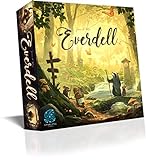
- Best middleweight: Everdell (1–4 players) — a rule-driven opponent called Rugwort, lighter machinery than an Automa and quicker to run for it. £49.35
- Skip: anything whose solo rules are a one-page download rather than part of the box. If the publisher didn't print it, it usually wasn't balanced with the rest of the game.
Plenty of board games print a '1' on the front of the box. Almost none of them explain what that 1 is for. Sometimes it's a designed opponent that takes spaces off you and adapts; sometimes it's a target score and a page in the back of the rulebook. Both are sold the same way, at the same price, with the same number on the box. This guide separates the two, and it's the alone-at-the-table companion to our best board games for UK families guide.
Everything below is a widely-stocked game whose facts are checkable: player counts, box ages, rough play times and whether a solo mode is printed in the box don't change. Prices do, so the figures here come straight from Amazon UK.
TL;DR
- Best overall solo mode: Wingspan (1–5, 14+) — an Automa deck in the base box that competes for real goals. £54.92
- Heavy: Scythe (1–5, 14+) — an Automa that takes board positions, no dice anywhere. £65.95
- Short: Cascadia (1–4, 10+) — a 30-45 minute tile puzzle against a score target. £24.45
- Solo-only: Final Girl — one player, no multiplayer mode to compromise it. Core box plus scenario boxes.
- Check before you buy: whether the solo rules are in the box or on a download. If the publisher didn't print it, nobody balanced it.
The four kinds of solo mode
This is the whole buying decision, and the box usually tells you which one you're getting if you know what to read for.
- Solo-only design. The game has no multiplayer mode at all, so nothing in it is a compromise. Final Girl is the example here. Nothing is bolted on because there was nothing to bolt it to.
- A card-driven opponent (an 'Automa'). A deck plays an opponent's turns: it claims spaces, chases goals and changes the board. Wingspan and Scythe both ship one in the base box, with difficulty levels. This is the closest thing to a real opponent.
- A rule-driven opponent. Lighter machinery — a short set of rules that advances a token or takes a card, like Everdell's Rugwort. Faster to run, less varied than a deck.
- A score target. You play the normal game and try to beat a number, sometimes across a difficulty ladder. Cascadia does this. It's a puzzle rather than a duel, which is the right call for a short game.
And a fifth case that isn't really a solo mode at all: a co-operative game where one player holds every hand. That's the same game with fewer people in the room, which is why it works — see Pandemic Fall of Rome below.
Best solo-only design — Final Girl
You play the survivor of a slasher film; the killer is run entirely by the game's rules and card decks. One player, 20–60 minutes per scenario. It's the clearest illustration of the point this guide is making: there is no two-player mode anywhere in it, so no rule in the box was written for a table and then trimmed.
The one thing to get right is how it's sold. There's a core box, and then separate scenario boxes — sold as 'Feature Films' — each with its own killer and location. The scenario boxes say 'core box required' and they mean it: on their own they will not play. Check which you have in your basket.
Trade-off: it's one player, full stop. If you want something you can also take to a friend's house, everything else on this page does both.
Best solo mode in a mainstream box — Wingspan
You collect bird cards, gather food from a dice tower, lay eggs and place birds across three habitats, each of which does something different when you use it. 1–5 players, box age 14+, 40–70 minutes.
- The Automa deck is in the base box. It isn't an expansion and it isn't a download: the solo opponent ships with the game, with its own difficulty levels.
- It competes for things that matter. The Automa takes habitat spaces and chases the end-of-round goals, so your plan has to bend around it instead of just running.
- Setup is manageable. Enough variability from the bird deck to stay fresh, not so much that it's a chore to lay out alone.
Trade-off: even at a full table, players barely interfere with each other. If what you want from a game is conflict, this is the wrong shelf — see our strategy games guide for the confrontational end.
Best heavy solo — Scythe
You run a faction in an alternate 1920s Europe: build structures, upgrade your actions, move mechs out onto the map and take territory. 1–5 players, box age 14+, 90–115 minutes.
- The Automa plays spatially. It moves onto the map and holds ground, so it applies the kind of pressure a score target can't: you lose positions, not just points.
- No dice in the game at all. Alone that matters more than it sounds — a bad result is a bad plan rather than a bad roll.
- Several difficulty settings, so it keeps giving you a harder problem after you start winning.
Trade-off: the setup and teardown either side of a 90-minute game is the reason big boxes don't get played on weeknights. Buy it if you have a table you can leave it on.
Best middleweight — Everdell
Place workers to gather resources and play cards to build a woodland city across four seasons, with cards that combo off each other. 1–4 players.
- Rugwort is a rule-driven opponent, not a deck: a short set of instructions that takes spaces and cards off you, with difficulty levels to work up. Less varied than an Automa, noticeably quicker to run.
- Nothing about the box is diminished solo. The card tree and the components are most of why people buy it, and they're all still there at one player.
Trade-off: the footprint is large even alone, and if card-combo engines leave you cold the whole game will.
Best short solo — Cascadia
Each turn you take a habitat tile and a wildlife token as a pair, and build a landscape that has to score well for both the terrain and the animals on it. 1–4 players, box age 10+, 30–45 minutes.
- It's honest about being a puzzle. The solo game is a scoring threshold, not an opponent, and for a 30-minute game that's the right trade — no bot upkeep between your turns.
- Setup and teardown are minutes. This is the one on the page that gets played on a Tuesday.
- The lowest box age here at 10+, which also makes it the easiest to share with a family later.
Trade-off: there is nothing to react to. If the appeal of solo play for you is being outmanoeuvred, this isn't it.
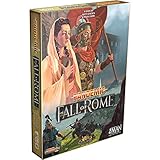
Best co-operative that really plays at one — Pandemic Fall of Rome
The Pandemic engine, rebuilt around the collapse of the Roman empire: invading tribes advance along migration routes, you move legions and shore up borders, and the event deck keeps making it worse. Box age 8+, 1 to 5 players, 45–60 minutes.
- The '1' is honest here. A co-operative game alone is the same game with fewer hands — no variant rules, nothing rebalanced.
- The lowest barrier on the page. Box age 8+ and a well-known system, so it's the cheapest way to find out whether you like playing alone at all.
Trade-off: the pressure comes from a deck, not from a plan. It feels like fighting a fire rather than playing against someone, which some people want and some don't.
Comparison table
| Game | Players | Box age | Play time | Kind of solo mode | In the base box? | Price |
|---|---|---|---|---|---|---|
| Final Girl | 1 only | — | 20–60 min | Solo-only design | Core box + scenario boxes | — |
| Wingspan | 1–5 | 14+ | 40–70 min | Automa deck | Yes | £54.92 |
| Scythe | 1–5 | 14+ | 90–115 min | Automa deck, board presence | Yes | £65.95 |
| Everdell | 1–4 | — | — | Rule-driven opponent | Yes | £49.35 |
| Cascadia | 1–4 | 10+ | 30–45 min | Score target | Yes | £24.45 |
| Pandemic Fall of Rome | 1–5 | 8+ | 45–60 min | Co-op played with more hands | Yes | — |
Things the marketing doesn't tell you
- A '1' on the box is a player count, not a feature. Nothing obliges a publisher to say which of the four kinds of solo mode you're getting, and most listings don't. The phrase worth hunting for in the description is a named one — 'Automa', 'solo variant', a named bot — because a named mode is a designed one.
- Printed in the box beats a download. Fan-made and web-only solo rules exist for almost everything, and some are good, but they weren't balanced alongside the rest of the game and they don't come with the components the mode needs. If solo is the reason you're buying, buy a game that shipped with it.
- Setup time is the real cost, not play time. A 90-minute game is closer to two hours door to door once you've laid it out and bagged it up again, and alone there's nobody to help with either end. This is what quietly decides which boxes get played.
- Expansions usually add Automa cards, not Automa rules. An expansion for a game with a solo opponent generally extends the deck to cover its new content. Useful once you're playing a lot; no help at all if the base solo mode isn't to your taste.
- Difficulty levels are the replay value. A solo mode with one fixed target is a game you can finish. One with a ladder keeps handing you a harder version of the same problem, which is the difference between a month of play and a year.
Verdict
If you buy one solo game: Wingspan. The Automa is in the base box, it competes for the things you want, and the game is also good with people in the room.
If it has to fit in half an hour and go back in the cupboard: Cascadia — a puzzle rather than a duel, and the one most likely to get played on a weeknight.
If you want solo with nothing compromised for a table that will never sit down: Final Girl, remembering that the scenario boxes need the core box.
Shopping for two rather than one is a different list entirely — see our 2-player guide. For the heavier multiplayer end, our strategy games guide sorts them by weight, and our co-operative games guide covers the everyone-against-the-board shelf.
Our picks
Final Girl
Van Ryder Games
A one-player horror game where you play the survivor of a slasher film against a killer run entirely by the game's own rules and card decks. 1 player, 20–60 minutes per scenario. It matters here because nothing in it is a converted multiplayer rule: there is no two-player mode to compromise the design. Note how it's sold — a core box plus separate 'Feature Film' scenario boxes, and the scenario boxes will not play on their own. Not for anyone who wants a game they can also bring to a table of friends.

Wingspan 2nd Edition
Stonemaier Games
Collect bird cards and food, place birds across three habitats, and build an engine that pays off over four rounds. 1–5 players, box age 14+, 40–70 minutes. The base box includes an Automa deck: a card-driven opponent that claims spaces and competes for end-of-round goals, which is a genuine opponent rather than a target score, and it comes with its own difficulty levels. Not for someone who wants confrontation — players barely interfere with each other even at full table.
£54.92 Retrieved on 16/10/2026 · prices subject to change

Scythe Board Game
Stonemaier Games
An engine-building game on a map: you expand, build structures, move mechs and claim territory in an alternate 1920s Europe. 1–5 players, box age 14+, 90–115 minutes. The included Automa opponent takes and holds board positions, so it pressures you spatially instead of just accumulating points, and it has multiple difficulty settings. Note it uses no dice at all, so a solo loss is on your plan rather than a roll. Not for a short evening, and not for anyone who wants a game they can set up and finish in half an hour.
£65.95 Retrieved on 16/10/2026 · prices subject to change
Everdell 2nd Edition
Starling Games
Place workers and play cards to build a woodland city across four seasons. 1–4 players. The solo game is against Rugwort, an opponent run by a short set of rules rather than a full deck, with difficulty levels to climb; it's lighter machinery than an Automa and plays faster for it. The components and the card tree are the reason this box gets bought, and none of that is lost at one player. Not for anyone who dislikes card-driven combos, and not for a small table — the footprint is large even solo.
£49.35 Retrieved on 16/10/2026 · prices subject to change

Cascadia Family Board Game
AEG
Draft a habitat tile and a wildlife token together each turn and build a Pacific Northwest landscape that scores for both. 1–4 players, box age 10+, 30–45 minutes. The solo game is a puzzle against a scoring threshold rather than an opponent, and it's upfront about that, which is the right trade for a game you can set up and finish inside an episode of something. Not for anyone who wants an opponent to react to — there isn't one.
£24.45 Retrieved on 16/10/2026 · prices subject to change
Pandemic Fall of Rome
Z-Man Games
The Pandemic system reskinned as the collapse of the Roman empire: invading tribes spread along migration routes and you shore up the borders. Box age 8+, 1 to 5 players, 45–60 minutes. A co-operative game at one player is the same game with fewer hands, which is why the '1' on this box is honest rather than a stretch, and the lower box age makes it the most approachable solo start here. Not for anyone who wants an opponent with intent — the pressure comes from a deck, not a plan.
£74.65 Retrieved on 16/10/2026 · prices subject to change
On ThePriceMonkey
Products from this guide in our catalogue — current price, specs and availability on each page.
- Wingspan 2nd Edition · Stonemaier Games
- Scythe Board Game · Stonemaier Games
- Everdell 2nd Edition · Starling Games
- Cascadia Family Board Game · AEG
- Pandemic Fall of Rome · Z-Man Games
FAQ
What does '1-4 players' on a box actually guarantee?
Less than people assume. It can mean any of four things: an opponent system printed in the rulebook (an Automa deck or a rule-driven bot), a difficulty ladder you climb, a target score to beat, or a co-operative game where one player simply controls more than one character. All four are legitimate, but they're different purchases. The thing to look for on the back of the box or in the listing is a named solo mode or a named opponent — 'includes Automa solo mode', 'solo variant against Rugwort'. A bare '1' with no further mention usually means the lightest of the four.
What is an 'Automa', and is it better than a score target?
An Automa is a deck of cards that plays an opponent's turns: it takes spaces, claims goals and competes for the same things you want, without needing any decision-making from you. Wingspan and Scythe both ship one in the base box. It's better than a score target in one specific way — it changes the board, so your plan has to adapt mid-game rather than just executing against a number. A score target is simpler to teach yourself and quicker to set up, which is a real advantage for a short game like Cascadia. Neither is objectively right; an Automa suits a longer game where adapting is the interesting part.
Is a co-operative game a good solo game?
Often yes, and it's the cheapest route in. A co-op game played alone is mechanically the same game, just with one person holding every hand, so nothing has been bolted on and nothing is unbalanced. Pandemic Fall of Rome prints 1 to 5 players on the box for exactly that reason. The limit is the kind of tension on offer: the pressure comes from a deck of events rather than an opponent with a plan, so it feels like fighting a fire rather than playing against someone. If you want to be outmanoeuvred, you want an Automa. Our co-operative games guide covers the multiplayer side of these.
How is solo different from a two-player game?
They solve opposite problems. A two-player game is designed around reading an opponent — bluffing, blocking, reacting to a person — and most of that machinery is wasted or missing when you play alone. A solo mode replaces the person with rules, so the interesting part moves from psychology to planning against a known system. That also means the best two-player games are frequently poor solo buys and the reverse, so it's worth deciding which one you're actually shopping for. Our 2-player guide is the other half of this.
Do solo modes have replay value, or do you solve them?
The ones with difficulty levels last longest, which is why they're worth looking for on the box. An Automa with several settings and a game with a lot of variable setup — different bird cards, different map tiles, a different scenario — keeps producing new problems. A fixed score target in a game with little setup variability is the one you can genuinely finish: you hit the number, and the reason to play again is enjoyment rather than challenge. Scenario-based solo games like Final Girl sit at the other end, because each new scenario box is a new problem by design.
Does anything here work if I also want to play with other people?
Most of it. Wingspan, Scythe, Everdell, Cascadia and Pandemic Fall of Rome all list a multiplayer range on the box, so the solo mode is an addition rather than the whole product. Final Girl is the exception and is openly one-player only. If the game will mostly be played with family, buy on the multiplayer merits first and treat the solo mode as a bonus; our best board games for UK families guide starts from that end.
Is a 90-minute game worth setting up for one person?
It depends entirely on whether you'll leave it out. The hidden cost of a heavy solo game isn't the play time, it's the twenty minutes of setup and teardown either side, and that's what quietly stops Scythe-sized boxes getting played on a weeknight. If you have a table you can leave a game on, the long ones are the better buy because the Automa opponents are the more interesting ones. If the game has to come out of a cupboard and go back the same evening, something in the 30-45 minute band like Cascadia will get played far more often, and a game that gets played beats a better game that doesn't.