As an Amazon Associate we earn from qualifying purchases. Prices and availability are shown on Amazon, not here.
Key takeaways
- Check the validation list first. The British and Irish Hypertension Society (BIHS) publishes the monitors that passed an independent accuracy study. Match the model code on the box, not the name on the listing.
- Upper arm, not wrist: the British Heart Foundation says to choose an upper-arm monitor if you can, and a wrist cuff only if you can't use one on the upper arm.
- Measure your arm before you buy. Most monitors come with a 22-32 cm cuff. If your arm is outside that, buy the model with the wider cuff or a separate one in your size.
- Simple and listed: A&D UA-651 and its derivative the UA-611, both on the BIHS list. Wider 22-42 cm cuff: Microlife BP B1 Classic or Withings BPM Connect.
- This guide is about buying, not about your numbers. What your readings mean is for your GP, nurse or pharmacist.
Which blood pressure monitor should you buy for home? One that is on the British and Irish Hypertension Society list of validated monitors, measures at the upper arm, and has a cuff that fits your arm. After that, the extras are a matter of taste. The A&D UA-651 is the simple listed choice. If your arm is larger, the Microlife BP B1 Classic and the Withings BPM Connect list a 22-42 cm cuff.
This is a buying guide, not medical advice. We don't say what your readings mean or whether you should be monitoring at all: that is for your GP, nurse or pharmacist. We checked each pick against the BIHS spreadsheet on 1 November 2026, and took the cuff sizes and features from Amazon's listings. We haven't used these monitors.
TL;DR
- Simple and listed: A&D UA-651. £22.95
- Basic and listed: A&D UA-611, a derivative of the UA-651. £16.50
- Wide cuff: Microlife BP B1 Classic, 22-42 cm. £21.95
- App and Wi-Fi: Withings BPM Connect, 22-42 cm. £89.00
Step 1: check the BIHS list
The BIHS publishes a spreadsheet of monitors that passed an independent validation study. The British Heart Foundation and the NHS both point people to validated monitors. Listings on Amazon say "clinically validated" freely, so the list is the check that matters.
Two things trip people up:
- Model codes, not names. The list goes by the maker's code. Omron sells the X2 Basic with the code HEM-7121J-EO. The BIHS list has the HEM-7121J-E, and Omron's own instruction manual covers both codes in one document. That is close, not identical, and it is why the X2 Basic is not one of our picks. If an exact match matters to you, take the A&D UA-651 or the Microlife BP B1 Classic, which appear under their own names.
- Derivatives. Some monitors are listed as a "derivative" of a validated one, meaning the maker says it has the same measuring system. The A&D UA-611 is listed as a derivative of the UA-651, and the Microlife BP B1 Classic as a derivative of the BP B3 AFIB.
Step 2: get the cuff size right
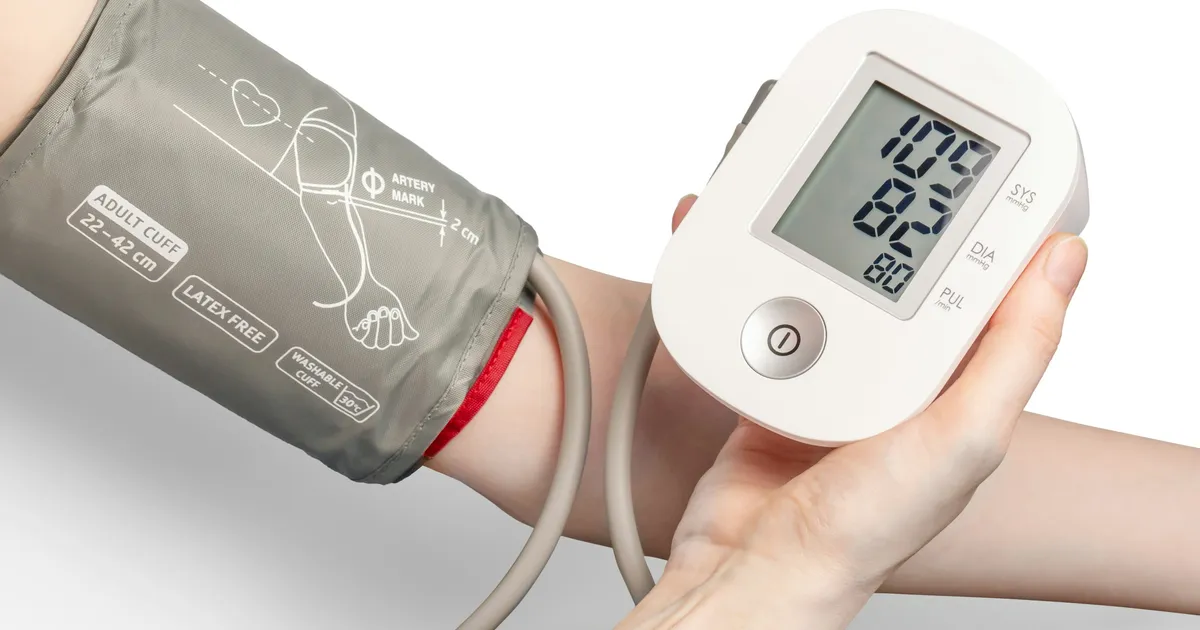
A cuff that doesn't fit your arm is one of the things that makes home readings unreliable, which is why the British Heart Foundation spells out how it should fit. Measure your upper arm halfway between shoulder and elbow with a soft tape measure. Then:
- 22-32 cm: the standard cuff on the A&D UA-651 and UA-611.
- Up to 42 cm: the Microlife BP B1 Classic and Withings BPM Connect list a 22-42 cm cuff.
- Larger arms on an A&D: A&D sells the UA-651SL with a 23-37 cm cuff, per its listing. The BIHS entry is for the UA-651; ask A&D or your pharmacist if you want the cuff confirmed.
The British Heart Foundation's rule for fit: snug, with just enough room to slide two fingers underneath.
Comparison table
| Model | BIHS list (1-nov-2026) | Cuff (listing) | Memory (listing) | Power | Connectivity |
|---|---|---|---|---|---|
| A&D UA-651 | Yes, by name | 22-32 cm | 30 readings, average | 4 x AA, AC adapter optional | None |
| A&D UA-611 | Yes, derivative of UA-651 | 22-32 cm | Not stated on the listing | Batteries included | None |
| Microlife BP B1 Classic | Yes, derivative of BP B3 AFIB | 22-42 cm | 30 readings, average | Not stated on the listing | None |
| Withings BPM Connect (WPM05) | Yes, by name | 22-42 cm | 8 readings offline | Rechargeable, USB | Wi-Fi, Bluetooth, app |
What the extras add
Apps and Wi-Fi. The Withings BPM Connect sends readings to an app and can export a report. Useful if your GP asks for a week of readings. A paper notebook does the same job with any monitor.
Averages. The A&D UA-651 and Microlife BP B1 Classic show an average of stored readings, per their listings. Handy, but check how many readings it averages over.
Mains power. Monitors that run on batteries can take an adapter. For the A&D, the AC adapter is sold separately. Buy the one the maker names for your model.
If you're building a home routine, our walking pads guide covers moving more at a desk. It isn't a substitute for anything your GP has told you.
Things the marketing doesn't tell you
- "Clinically validated" on a listing proves nothing by itself. Find the model code on the BIHS list.
- "GP recommended" is the seller's wording. Some A&D listings say their monitors are supplied to GP surgeries. That is a sales channel, not a validation.
- AF and irregular heartbeat symbols aren't a diagnosis. The BIHS notes against one listed monitor that AF detection doesn't mean it is validated for use in people with AF. If you have AF, ask your GP which monitor to use.
- Colour bands are the maker's. Some monitors colour your reading green, amber or red against the maker's own scale. Your GP may use different targets for you.
- Monitors wear out. The BIHS says to replace a home monitor after a maximum of four years of use, sooner if the cuff is damaged.
- Two people, one cuff. If two people in the house will use it, both arms have to fit the cuff range.
- Wrist and finger devices. The British Heart Foundation puts wrist cuffs as a fallback. Smartwatches and rings are outside the validation lists.
Verdict
Check the BIHS list, measure your arm, then choose. The A&D UA-651 is the simple choice on the list by name. For a larger arm, the Microlife BP B1 Classic lists a 22-42 cm cuff. If you want readings on your phone, the Withings BPM Connect. Take what the readings mean to your GP, nurse or pharmacist.
Our picks

A&D Medical UA-651
A&D Medical
On the BIHS list (ESH International Protocol 2010). 22-32 cm cuff, 30 memories with an average, irregular heartbeat indicator, carry case, AC adapter optional, per the listing.
£22.95 Retrieved on 19/11/2026 · prices subject to change

A&D Medical UA-611
A&D Medical
On the BIHS list as a derivative of the UA-651. 22-32 cm cuff, five-year warranty excluding cuff and batteries, per the listing.
£16.50 Retrieved on 19/11/2026 · prices subject to change

Microlife BP B1 Classic
Microlife
On the BIHS list as a derivative of the BP B3 AFIB. Cuff for 22-42 cm arms, 30 memories with an average, irregular heartbeat detection, per the listing.
£21.95 Retrieved on 19/11/2026 · prices subject to change

Withings BPM Connect
Withings
On the BIHS list as BPM Connect (WPM05), including a separate entry for pregnancy and pre-eclampsia. 22-42 cm cuff, Wi-Fi and Bluetooth sync to an app, USB charging, per the listing.
£89.00 Retrieved on 19/11/2026 · prices subject to change
On ThePriceMonkey
Products from this guide in our catalogue — current price, specs and availability on each page.
- A&D Medical UA-651 · A&D Medical
- A&D Medical UA-611 · A&D Medical
- Microlife BP B1 Classic · Microlife
- Withings BPM Connect · Withings
FAQ
What does validated mean for a blood pressure monitor?
That the model has been tested against readings taken by trained observers, following a recognised protocol, in an independent study. The BIHS lists monitors that passed. A listing that says "clinically validated" is the seller's claim. Check the model code against the BIHS list yourself.
Is a wrist blood pressure monitor accurate?
The British Heart Foundation says to choose an upper-arm monitor if you can, and to use a wrist cuff only if you can't use one on the upper arm. Wrist monitors are more sensitive to the position of your arm. Every pick in this guide is upper-arm.
What cuff size do I need?
Measure around the middle of your upper arm, halfway between shoulder and elbow, with a soft tape. Then pick a monitor whose cuff range covers that number with some room. Most come with a 22-32 cm cuff. The Microlife BP B1 Classic and Withings BPM Connect list 22-42 cm. The British Heart Foundation says the cuff should be snug, with just enough room to slide two fingers underneath.
Can a home monitor detect atrial fibrillation?
Some monitors flag an irregular heartbeat or say they detect AF. On its own list, the BIHS notes against one monitor that AF detection doesn't mean it has been validated for use in people with AF. Treat the symbol as a reason to talk to your GP, not as a diagnosis.
How long does a home blood pressure monitor last?
The BIHS says home monitors should be replaced after a maximum of four years of use, with a validated replacement, and sooner if the cuff is damaged or the readings are in doubt.
How should I take a reading at home?
The British Heart Foundation's steps: sit upright with your back supported and feet flat, rest your arm on a table with your hand relaxed, take a reading, then repeat it a few minutes later. If your GP or nurse has asked you to check, they will tell you how often and when. Follow your monitor's instructions too.