As an Amazon Associate we earn from qualifying purchases. Prices and availability are shown on Amazon, not here.
Key takeaways
- Grid and type size come first. Squeezing 200 puzzles into a small paperback means small grids and small print, and that is the most common reason a puzzle book stops being opened.
- Paper weight decides whether you can use a pen. Thin paper bleeds through and ruins the puzzle on the back. Pencil-only is fine if you know that going in.
- Spiral binding stays open flat. A thick perfect-bound paperback fights back, and solving needs one hand for the pen and one for the page.
- Check the solutions exist, and where. Some books put them at the back, some at the foot of the next page where you will see them by accident, and a few leave them out.
- "Expert" is not a standard. Difficulty labels are set per publisher, so an expert grid in one series can be an easy one in another. Judge by the sample pages, not the word on the cover.
- A casebook is not a puzzle book. A murder-mystery casebook is one long sitting, often better with other people, and once you know the answer it does not replay.
Puzzle books are bought blind. Most people sort by bestseller, pick the cover with the biggest number on it, and never look at a page until the book arrives. Then it gets opened twice and goes in a drawer. The reasons are mundane and mechanical: the grids are too small, the paper will not take a pen, the book will not stay open, or the difficulty label meant something different to that publisher than it did to the last one.
This guide is about those specs. The picks below are types of book rather than single titles, because puzzle books are published in long interchangeable series and the right buy is the one with the right physical format, not the one with the famous name on the spine.
TL;DR
- Tired eyes, short gaps: Large print word search book - bigger grids, fewer puzzles, no learning curve.
- Solving with a pen: Spiral bound sudoku book - lies flat, usually heavier paper.
- A habit that lasts months: Cryptic crossword collection - one puzzle can fill an evening.
- One evening with other people: Murder mystery casebook - solved once, then done.
- Skip: the small paperback with the biggest puzzle count on the cover. The count came out of the grid size.
What to check on the listing before you buy
Five things, in order of how often they decide whether a book gets used.
- Grid and type size. The number one reason people give up. Use the Look Inside preview and look at a real page. A high puzzle count in a slim paperback is a warning, not a feature.
- Paper weight. Decides whether you can use a pen at all and whether ink shows through to the puzzle on the back. Listings rarely state it, so treat silence as thin paper.
- Binding. Spiral and wire-o stay open flat and fold back on themselves. A thick perfect-bound paperback closes itself, and solving needs both hands, one for the pen and one for the page.
- Solutions. Check they are included, and where. At the back is normal. At the foot of the following page means you will read the answer by accident. A few books leave them out entirely or push them to a website.
- Difficulty labelling. "Expert" is set per publisher and means nothing across series. Sample the page instead.
Classic puzzle book or murder-mystery casebook
These get shelved together and shopped together, and they are not the same purchase.
A classic puzzle book is a container of many small independent puzzles. It is consumed in spare ten-minute gaps, on a commute or in a waiting room, and a single book normally lasts weeks or longer. Interruptions cost nothing because each puzzle is self-contained. It is a solo activity by default.
A murder-mystery casebook is one case, worked through in order, usually across a single long sitting. It is often better with two or three people, because sharing documents and arguing about them is most of the appeal. It has one solution, and once you know it the book does not replay. If the person you are buying for wants something to dip into all year, a casebook is the wrong shape. If they want an evening that is not the television, it is the right one, in the same way a games night is. Our best co-operative board games guide covers the table version of that evening.
Large print word search book
The lowest-friction puzzle type there is: no rules to learn, no held state, and you can stop mid-grid without losing anything. Large print editions trade puzzle count for bigger squares and bigger letters, which is exactly the trade worth making if the reader has tired eyes or solves in poor light. Not the pick for someone who wants to be made to think.
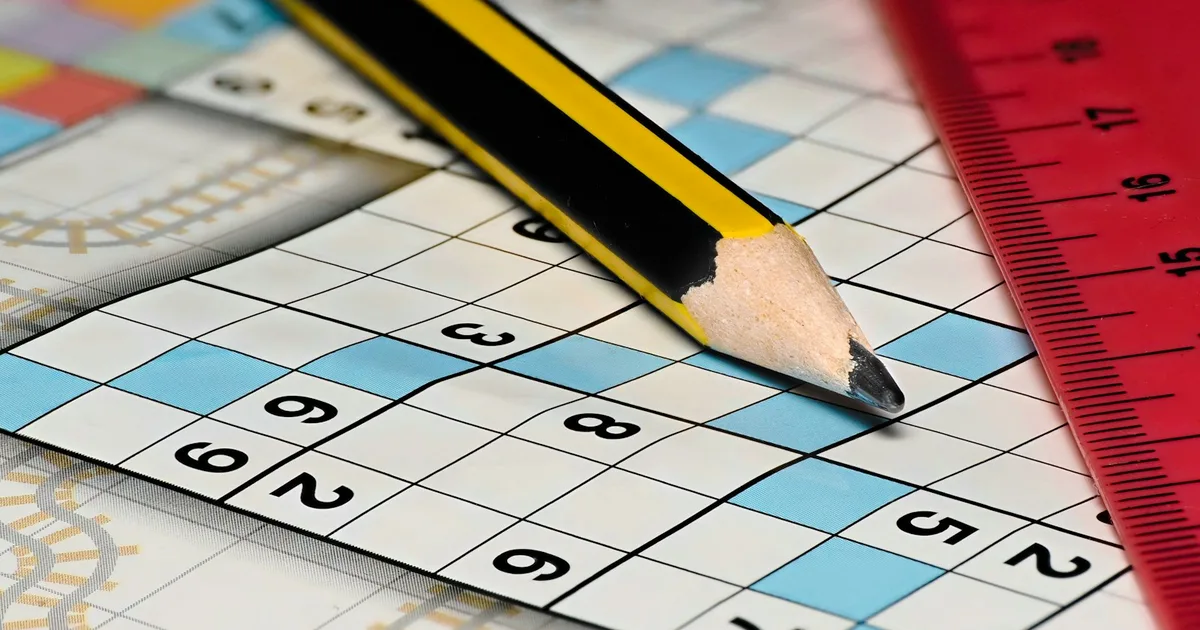
Spiral bound sudoku book
Sudoku is written into more than it is read, so the binding matters more here than in any other type. A wire binding folds back on itself and stays put on a lap, an armrest or a small table. Spiral editions also tend to use heavier paper than mass-market paperbacks, which is what makes pen use viable. The cost is bulk, and the wire catches on things in a bag.
Cryptic crossword collection
Cryptics have the steepest entry of anything here and the longest life afterwards. The clue conventions have to be learned once, and until they are, the book is opaque rather than hard. After that a single puzzle can fill an evening and a collection lasts months. Most collections reprint a newspaper series, so check which one: setters differ a lot in style even inside one paper.
Logic puzzle book
Grid deduction puzzles, plus relatives like nonograms and bridge-building puzzles. These want a sitting and a clear head, and they punish interruption: lose your place in a half-filled grid and the safe move is to start that puzzle again. Grid size matters most of all here, because these are the puzzles with the most marks per square.
Murder mystery casebook
A single case presented as evidence: statements, maps, photographs, newspaper cuttings. You read, cross-reference and name a culprit, and the book tells you whether you were right. Best with two or three people and a big table. Worth knowing before buying: it is one evening, not a season, and it is not re-solvable. Treat it as a night in rather than as a book.
Mixed puzzle compendium
A rotation of types in one volume. The case for it is a household where more than one person picks the book up, or a reader who does not yet know which type they like. The case against is that nobody gets a full book of their own type, and compendiums are where the smallest grids tend to appear, since several puzzle styles are being fitted onto the same page size.
Comparison table
| Type | Session length | Solo or shared | Replay | Entry barrier | Binding matters |
|---|---|---|---|---|---|
| Large print word search | 5-15 min | Solo | No | None | Low |
| Sudoku | 10-30 min | Solo | No | Low | High |
| Cryptic crossword | 30 min to an evening | Solo or pair | No | High | Medium |
| Logic puzzles | 20-45 min | Solo | No | Medium | High |
| Murder mystery casebook | One long sitting | Better shared | No, solution known | Low | Low |
| Mixed compendium | 5-30 min | Solo, shared book | No | Low | Medium |
Things the cover doesn't tell you
- The puzzle count and the grid size are the same number. Page count is fixed by the format, so more puzzles means smaller grids and smaller print. The cover only advertises one half of that trade.
- "Large print" is applied to the text, not always to the grid. Some editions enlarge the instructions and clues and leave the grid alone. The preview page settles it.
- Paper weight is almost never listed. Spiral-bound and large print editions tend to use heavier stock, and slim mass-market paperbacks tend not to. If it matters, buy the format rather than trusting the description.
- Solutions placement is a real decision. Answers printed at the foot of the next page get read by accident. At the back is the safer layout.
- Difficulty labels do not travel. An expert book from one publisher can be easier than a medium one from another. Two sample pages tell you more than the word on the cover.
- Series numbering is not progression. Volume 12 of a series is not harder than volume 3, it is just later. The difficulty band is set by the sub-series, not the number.
Verdict
For most people the right buy is the book whose physical format matches where it will actually be solved: large print if the light or the eyes are poor, spiral-bound if it gets written in with a pen on a lap, a cryptic collection if there is an appetite for a long habit. Check one page in the preview before ordering, and ignore the number on the cover.
For a present, decide first whether you are buying weeks of ten-minute gaps or a single evening. Those are two different products that share a shelf. If it is the evening you want, a casebook does the job once, and our best two-player board games guide covers the version that survives being played again.
Our picks

Large print word search book
Various publishers
Word searches with bigger grid squares and bigger letters, usually fewer puzzles per book as a result. The lowest-effort puzzle type, so it suits short gaps and poor light. Not for anyone who wants a genuine mental workout.
£7.50 Retrieved on 30/09/2026 · prices subject to change

Spiral bound sudoku book
Various publishers
Sudoku in a wire binding that lies flat and folds back on itself, so it works on a lap or a small table. Usually heavier paper than a mass-market paperback. Not for anyone packing light, as the wire adds bulk and catches in a bag.
£4.89 Retrieved on 30/09/2026 · prices subject to change

Cryptic crossword collection
Various publishers
Collected cryptic crosswords, normally reprinted from a newspaper series, with solutions at the back. One puzzle can take a whole evening, so a single book lasts months. Not a starting point if you have never met cryptic clue conventions.
£7.59 Retrieved on 30/09/2026 · prices subject to change

Logic puzzle book
Various publishers
Deduction puzzles solved on a printed grid from a list of clues, plus related types such as nonograms and hashi. Needs a proper sitting and a clear head. Not suited to interruptions, because losing your place in a grid usually means starting the puzzle again.
£7.49 Retrieved on 30/09/2026 · prices subject to change
Murder mystery casebook
Various publishers
A single case told through documents, maps, statements and physical clues that you work through in order to name a culprit. One long sitting, and it works well with two or three people round a table. Not reusable once solved, and not a book for spare ten-minute gaps.
Mixed puzzle compendium
Various publishers
A rotation of types in one volume: word searches, sudoku, quick crosswords, wordwheels, codewords. Useful when more than one person picks it up. The trade-off is that nobody gets a full book of the type they actually like.
On ThePriceMonkey
Products from this guide in our catalogue — current price, specs and availability on each page.
- Large print word search book
- Spiral bound sudoku book · Generic
- Cryptic crossword collection · Collins
- Logic puzzle book · Souvenir Press
FAQ
What is the single most useful thing to check before buying a puzzle book?
Grid and type size. Publishers advertise the puzzle count on the cover, and a high count in a small paperback means the grids shrank to fit. Small grids and small print are the most common reason people say they stopped using a book. Open the Look Inside preview and look at an actual page rather than the cover claim. If more than one person in the house will use it, or the light where it gets solved is poor, buy a large print edition and accept fewer puzzles.
Can I use a pen, or do I have to use pencil?
That depends on the paper, and listings rarely state the weight. Thin mass-market paper takes ballpoint badly: ink shows through and can spoil the puzzle printed on the reverse. Heavier paper, which is more common in spiral-bound and large print editions, handles a fine ballpoint. Pencil always works and lets you undo, which matters in sudoku and logic grids. If a listing does not mention paper at all, assume it is thin and plan for pencil.
Does "expert" or "hard" on the cover mean anything?
Only within that publisher's own range. There is no shared scale across publishers, so an expert grid in one series can sit at medium in another. The label is useful for comparing books inside one series and close to useless for comparing across series. Judge difficulty from a sample page in the preview: for sudoku, count the given numbers; for crosswords, read two or three clues.
Is a murder-mystery casebook a good present for someone who likes sudoku?
Usually not, because they are different activities. A classic puzzle book is consumed in spare ten-minute gaps and lasts weeks. A casebook is one long sitting, often better with two or three people, and once the solution is known it does not replay. Both can be good buys, but a sudoku solver who wants something to fill a commute will not get that from a casebook. Buy for the gap it has to fill.