As an Amazon Associate we earn from qualifying purchases. Prices and availability are shown on Amazon, not here.
Key takeaways
- They are not alternatives. The robot keeps a clear floor clear, every day, unattended. The stick handles the spill, the stairs, the car and everything the robot cannot reach.
- Measure before you buy. The gap under your sofa and bed decides which robots can clean there. Robot height is published; your furniture is not.
- Almost none of them climb a step. A handful of 2026 flagships lift themselves over a threshold a few centimetres high; everything below that price bracket does not. Stairs are out for all of them, so a split level or a sunken room still means one robot per floor, or a stick.
- Check the decibel figure for the mode you will actually schedule, not the quiet mode used in the headline. A self-emptying dock is loud for a few seconds each run.
- Entry level now splits in two. Current cheap robots map with LiDAR; older cheap robots still on sale bounce around with no map at all. Only the listing tells you which one you are looking at.
- Consumables are part of the cost: filters, side brushes, brush rolls, mop pads, dock bags, and whether a replacement battery is sold for that model at all.
A robot vacuum and a cordless stick get compared as if you had to choose one. You do not. They do different jobs, and a house with both usually ends up cleaner with less effort than a house that bought the most expensive version of either.
The robot's job is maintenance: keeping an already clear floor clear, every day, while nobody is watching. The stick's job is everything else, and everything else is a lot. The spill, the stairs, the skirting boards, the sofa cushions, the car. No robot does any of that.
What decides which models suit you is not the spec sheet. It is your house. This guide is the smart-home sibling of our best UK smart home guide, and the same rule applies here as there: buy for the room you actually have.
TL;DR
- Tight furniture gaps: eufy RoboVac 11S Max - slim, no map, simple.
- Mapping robot, you empty it: Roborock Q7 Max - rooms, zones, no-go lines.
- Mapping robot with a self-emptying dock: Dreame L10s Ultra Gen 3 - if you have somewhere to put the dock.
- Stick for the detail work: Dyson V15 Detect, or Vax ONEPWR Blade 5 if a removable battery matters more than features.
- Skip: any robot you have not measured your sofa gap for, and any model whose spare filters are not listed.
What decides: your house, not the robot
Five things, in this order.
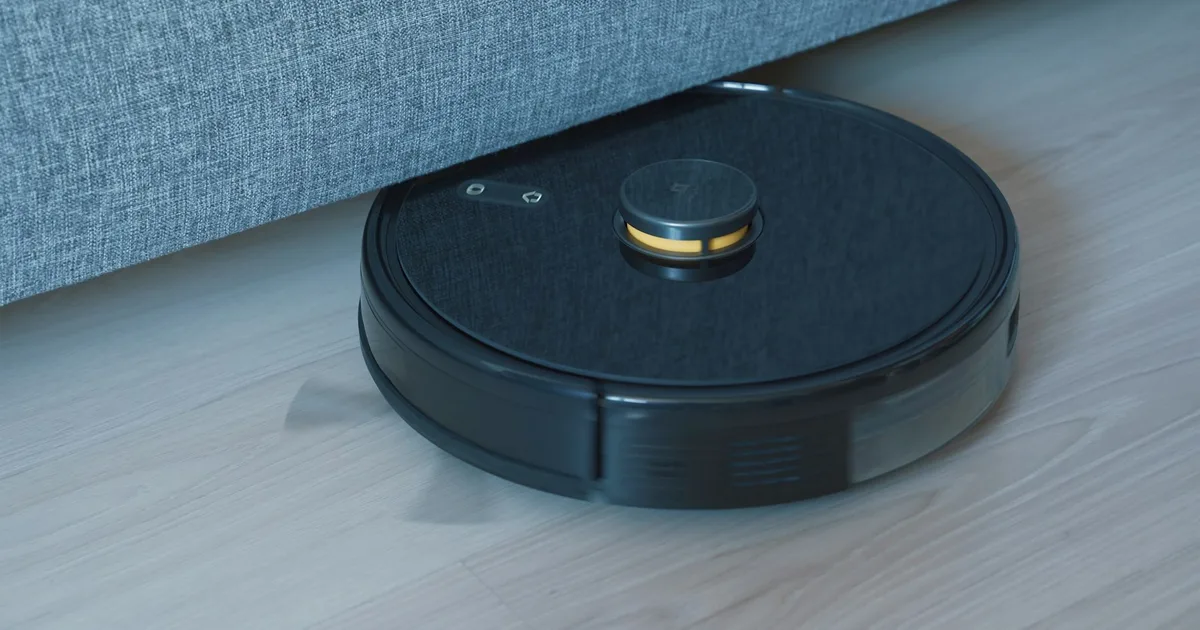
- Height against your furniture. Measure the gap under the sofa and the bed at its lowest point. The robot's height is in the listing; your furniture is the fixed part of the equation. Mapping robots with a laser turret carry a bump on top and are taller than flat bump-and-go units, which is the one real advantage the older design still has.
- Carpet pile. Deep pile is the hardest surface for a robot: it sinks in, brushes tangle, and a mopping model has to be kept off it. Hard floors and low-pile carpet are where a robot is at its best.
- Thresholds and steps. Most robots manage a small threshold and nothing more, so a single step between rooms splits your house into two zones the robot cannot join. The exception arrived in 2026: a few flagships, the Dreame X50 Ultra with its ProLeap system among them, hoist themselves over a step a few centimetres high, and they sit at the top of the price bracket. Stairs are out entirely, for every domestic robot on sale.
- Noise, in the mode you will schedule. Check the published decibel figure for the setting you will actually run, not the quietest one. If the plan is a run while you work from home, this is the number that decides whether the machine lasts a week before you turn it off.
- Clutter. A robot needs a floor it can drive on. Cables, shoes, toys and laundry are the difference between a robot that works and a robot that gets stuck.
Consumables are part of the price
Both types of vacuum are wearing machines. Before buying, check the listings for your exact model.
- Replacement filters on both robots and sticks, changed on a schedule in the manual.
- Side brushes and the main brush roll on a robot. Hair wraps around both.
- Mop pads if it mops, washable but not forever.
- Dock dust bags if the dock self-empties. That is a recurring purchase for as long as you own it.
- A replacement battery pack. The one to check hardest. If no battery is sold for that model, the machine has a fixed lifespan and no repair path.
eufy RoboVac 11S Max
The slim, simple end of the robot market. It navigates by bumping and turning rather than building a map, which means no app rooms, no no-go lines and a cleaning pattern that looks random because it is. In an open flat with a clear floor it still gets round. Its case is height: it is one of the lowest robots on sale, so it goes under furniture that stops a mapping model at the edge.
Roborock Q7 Max
LiDAR mapping, rooms in the app, no-go zones, and a mop pad for hard floors. You draw a line round the cat bowl and the machine respects it. The laser turret makes it taller than a bump-and-go unit, so measure first. Read the suffix on the listing: the plain Q7 Max charges only and you empty the bin, while the Q7 Max+ is the same robot sold with an auto-empty dock, and that version is the one usually in stock.
Dreame L10s Ultra Gen 3
The full dock version: it empties its own bin into the dock and deals with the mop pads there too. What you are buying is not cleaning performance so much as not thinking about it for weeks at a time. The cost is physical. The dock is a piece of furniture and needs a permanent spot near a socket, and it consumes bags. If there is nowhere sensible to put it, the dock is a downgrade rather than an upgrade.
Dyson V15 Detect
The stick as detail instrument. The laser head lights up dust on hard floors, which mostly tells you the floor was dirtier than you thought, and the tool set covers stairs, upholstery and the car. It is heavy in the hand held up at head height, and the highest power setting drains the battery fast, which is the standing trade of every cordless stick.
Shark Detect Pro
A stick that parks in a self-emptying dock, so emptying the bin turns from a per-use chore into a monthly one. Same caveat as the robot dock: it needs a socket and a corner, and it is only convenient if the dock lives somewhere you pass anyway.
Vax ONEPWR Blade 5
The pragmatic pick. Fewer features than the flagships, and a battery that comes out of the machine and is shared with the rest of the ONEPWR range. A spare pack doubles your runtime and a worn pack is a purchase rather than a write-off. That is worth more over five years than most of what the spec sheets argue about.
Comparison table
| Model | Type | Navigation | Dock | Best for | Main limit |
|---|---|---|---|---|---|
| eufy RoboVac 11S Max | Robot | Bump and go, no map | Charge only | Low furniture gaps | No zones or rooms |
| Roborock Q7 Max | Robot | LiDAR mapping | Charge only; self-empty on the Q7 Max+ | Rooms and no-go lines | Taller; plain version you empty |
| Dreame L10s Ultra Gen 3 | Robot | LiDAR mapping | Self-empty and mop care | Hands-off routine | Dock size and bags |
| Dyson V15 Detect | Stick | Handheld | Wall mount | Stairs, sofas, car | Weight held up high |
| Shark Detect Pro | Stick | Handheld | Self-empty | Less bin handling | Needs a dock spot |
| Vax ONEPWR Blade 5 | Stick | Handheld | Charge only | Removable battery | Fewer features |
Things the box doesn't tell you
- Entry level means two different machines now. A current cheap robot maps with LiDAR. An older cheap robot, still on sale beside it, bounces around with no map at all. The photographs look similar. Only the listing text tells you which, so read it for the word mapping, and treat its absence as an answer.
- The headline noise figure is the quiet mode. You will not schedule the quiet mode, because it is the weakest one. Find the figure for the setting you will run.
- A self-empty dock is loud in bursts. Quiet cleaning, then several seconds of a much louder noise at the end of each run. Worth knowing before you site the dock next to the sofa.
- Hair wraps round brushes on every machine. Anti-tangle designs reduce it. None eliminate it. Long hair or a shedding pet means cutting hair off a brush roll periodically, whatever the box says, and a spare anti-tangle brush roll is worth having before the old one frays.
- The robot does not tidy. It cleans a floor you have cleared. If clearing the floor is the hard part of your cleaning, a robot solves the easy half.
Verdict
If you buy one thing and your house has stairs, buy a cordless stick vacuum with a stair tool. If you buy one thing and your house is one level of hard floor with a clear run, buy the robot and accept that stairs-free is doing a lot of work in that sentence.
If you buy both, spend where the job is. The robot is a scheduling appliance: mapping is what makes it schedulable, and the dock is a convenience you pay for in floor space and bags. The stick is a tool: the head, the weight in your hand and whether the battery can be replaced are what you will notice in year three.
And measure the gap under the sofa before anything else. It is the one specification you cannot change afterwards. For the rest of the kitchen and home shelf, our best UK air fryers guide takes the same approach.
Our picks
eufy RoboVac 11S Max
eufy
One of the slimmest robots still widely sold, and it navigates by bumping and turning rather than mapping. Good where the gap under the sofa is the binding constraint and the flat is a simple open square. Not for you if you want zone cleaning, no-go lines or a tidy map in the app.
Roborock Q7 Max
Roborock
LiDAR mapping, app maps with rooms and no-go zones, and a mop pad for hard floors. A 2022 design, and what you will mostly find on sale is the Q7 Max+, which is the same robot bundled with an auto-empty dock. Taller than a bump-and-go robot because the laser turret sits on top, so check your furniture gap first. Not for you if you have nowhere to stand the dock and do not want to be emptying a small bin yourself.
Dreame L10s Ultra Gen 3
Dreame
Mapping robot with a large dock that empties the bin and handles the mop pads for you. The dock needs real floor space and a spot you can live with, and it uses bags. Not for you if you have no sensible dock location, or if you resent an ongoing bag and filter bill.
Dyson V15 Detect
Dyson
Cordless stick with a laser head that lights dust on hard floors, plus tools for stairs, sofas and the car. Heavy in the hand when held up at head height. Not for you if you want a floor cleaned without you standing behind it, or if the runtime on the highest setting matters more than pickup.

Shark Detect Pro
Shark
Cordless stick that parks in a dock and empties itself there, so the bin job becomes a once-a-month one. Dock needs a socket and a corner. Not for you if you have nowhere sensible to park it, since a docked stick is only convenient when the dock is in the way of nothing.
£319.00 Retrieved on 10/10/2026 · prices subject to change
Vax ONEPWR Blade 5
Vax
Cordless stick on a battery platform shared with other Vax tools, so the pack comes out and a spare can be bought and swapped. Simpler than the flagship sticks and lighter on features. Not for you if you want the lightest possible handheld or the most refined tool set.
On ThePriceMonkey
Products from this guide in our catalogue — current price, specs and availability on each page.
- Shark Detect Pro · Shark
FAQ
Do I need both a robot and a stick vacuum?
Most homes end up with both, because they do different jobs. The robot keeps an already clear floor clear, daily, without anyone present. The stick does the spill, the stairs, the skirting, the sofa, the car and the corner the robot cannot physically enter. If you can only buy one: stairs or a lot of clutter point to the stick; open hard floors, pets and a routine you want to stop thinking about point to the robot.
How do I know if a robot will fit under my furniture?
Measure the gap with a tape at the lowest point, then compare it against the height in the listing. Robots that map with a LiDAR turret carry a bump on top and are taller than the flat bump-and-go ones. Do not guess from the photos. If the sofa and bed gap is tight, height is the first filter and everything else is secondary.
Will a robot vacuum deal with stairs?
No. Stairs are out for every domestic robot on sale; cliff sensors stop it falling down them, which is the opposite problem. A single step is now a different question. A few 2026 flagships in the top price bracket, the Dreame X50 Ultra and its ProLeap system among them, hoist themselves over a threshold a few centimetres high. Anything cheaper does not, and a raised threshold between rooms will stop it dead. A house with stairs needs either a unit per floor or a stick vacuum for the steps, and the stick is usually the sensible answer.
What does a robot vacuum cost to keep running?
Filters, side brushes, the main brush roll, mop pads if it mops, and dock bags if it self-empties. All of these are wearing parts with a replacement schedule in the manual. Check that spares for your exact model are listed on Amazon UK before you buy, and check whether a replacement battery is sold for it, because a robot whose battery cannot be replaced has a fixed lifespan.